
In depth
The Digital Iconoclast
How One Beautiful Road reclaims attention, mortality and quiet stewardship
One Beautiful Road turns mindful reflection into small, private, real-world action. It is the companion to Beautifully Borrowed, a book of twelve reflections, and its approach runs against the design habits of most social media and habit-tracking apps.
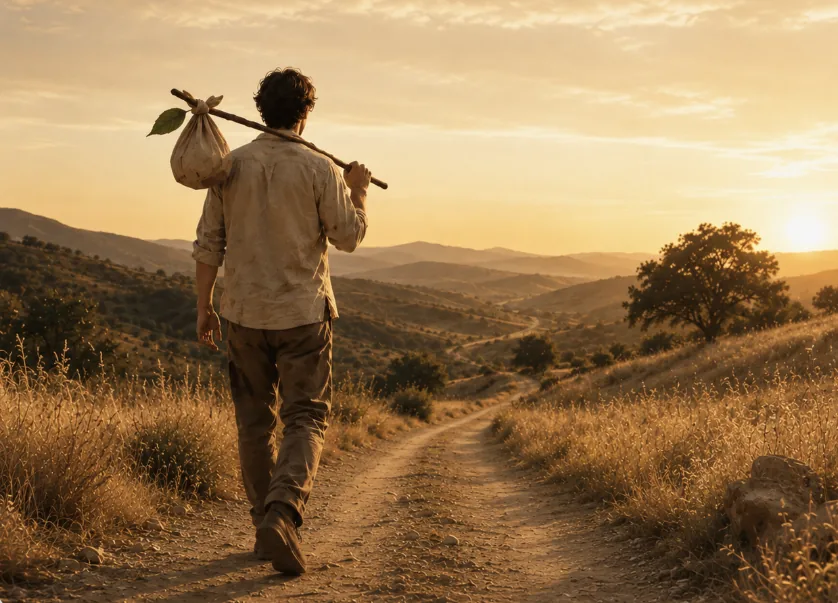
Most software is built on the quiet assumption that human attention is a resource to be mined. Feeds are tuned with variable rewards. Wellness apps turn calm into a streak. Even good deeds are turned into content with badges to earn, receipts to share and an audience to perform for. Against that background an app that has no scores, no leaderboards and no public profiles, and that mostly wants you to put your phone down, is more than a different design choice. It is a position.
That position belongs to One Beautiful Road and to Beautifully Borrowed: Twelve Reflections on Mortality, Attention and What We Leave Behind, the short book behind it. Both are the work of Ken Banks, a British social innovator and technologist. Read together, they make a deliberate and unfashionable pairing – a slow, offline philosophy of impermanence and a plain, private interface whose job is to turn that philosophy into something meaningful and real.
The idea underneath – a borrowed world
The book takes its starting point from mono no aware, the Japanese sense of the gentle poignancy of passing things. Its central image is a library book. Nothing we use in a life is ours to keep. Not the places we live, the communities around us or the people we love, and not even our own bodies. We are lent them for a while and what matters is how well we look after them and, where appropriate, the condition in which we hand them on.
From there follows the idea of being a good ancestor, a phrase popularised in recent years by the philosopher Roman Krznaric. It asks for a longer view than the news cycle or the next notification allows. How do we live now so that people we will never meet inherit something a little better than we found?
The book asks that question. The app is how One Beautiful Road tries to answer it. Reflection on its own can stay reflection. The app exists to turn it into small things that get done.
Four ways in
One Beautiful Road organises its everyday actions into four parts, or paths, each deliberately modest.
Time
Time is for small, practical acts that tend the shared world – skipping a car journey, lending or donating a book, cooking a little extra, taking a walk outside. These are things done, and sometimes done again, rather than ticked off once.
Talk
Talk is for conversation. It offers a gentle starting point for bringing up something that matters with a person in front of you, a quiet counterweight to the isolation of screens.
Learn
Learn is for widening what you notice. It offers short, carefully chosen reading, much of it hopeful, some of it hard, that stretches attention beyond the usual bubble.
Give
Give comes last, and on purpose. It does not present a catalogue of causes or a donation button. It looks at what a supporter has already learned, done and said, and only once there is real engagement with a cause does it introduce a vetted organisation through which to extend that care into a gift. One Beautiful Road never holds the money, and giving is the last step, not the first.
Breaking the mould
Iconoclasts break with convention, and this app does so quietly. Three choices set the app apart from nearly everything around it – kindness without an audience, a rejection of gamification and the gentle writing of a personal portrait, not a scoreboard.
Kindness without an audience. There are no public profiles, no sharing and no leaderboards. The reasoning is simple – an act of care is diminished once it becomes a performance. What you do stays between you and the thing you did.
A rejection of gamification. There are no streaks, no scores, no badges and no pressure to return. The app doesn’t try to make you anxious about a record that might lapse. It is self-paced and quiet, in keeping with the slow nature of the book it accompanies. There are no accounts to create, and what you do is kept on your own device.
The gentle writing of a portrait, not a scoreboard. The most unusual feature is a page called Your legacy so far. It is sometimes described as a kind of living obituary, though it is gentler than it sounds. Instead of counting actions it writes a short, private portrait of what your attention seems to say about what you care about. It might notice that you keep returning to water, or that you tend to stay with hard stories rather than turn away, or that you prefer small things done often.
The page is written on the device, from a bank of hand-written sentences chosen by simple rules, so it can only ever say things the authors have written and checked. It speaks in terms like ‘you seem to’ and never tells you who you are. It never scolds, never points to what is missing and never shows a number. It changes slowly as you do, and it is not shared, exported or posted anywhere. Its only audience is you.
Old ideas. New approach
The ideas behind all of this are not new, even though the approach might be. The thought that life is borrowed, and that we are caretakers rather than owners, turns up in many places. It has rarely needed a creed to hold it up.
Mono no aware, the Japanese sense of the gentle poignancy of passing things, gives the book its mood. The Stoics practised remembering that time is short, not to be gloomy but to spend it better. Buddhist thought puts impermanence at its centre, and pairs it with generosity given freely, without clinging to credit or outcome. Many Indigenous traditions ask how today’s choices will look to people not yet born. The Haudenosaunee idea of thinking seven generations ahead is a well-known example. And in cultures everywhere, stories of quiet giving, done without announcement, come round again and again.
What they share is practical more than spiritual. Pay attention, be kind, look after what you’ve been lent, and don’t treat life as a performance.
Our philosophy in seven principles
Put simply, these seven ideas shape everything the app does.
- 1
From caring to doing
Caring is only the beginning. The app helps people turn their concerns, values and good intentions into meaningful everyday action.
- 2
Small actions matter
We don’t need everyone to become an activist, philanthropist or campaigner. We need more people doing small, worthwhile things. Individually modest actions can collectively create substantial change.
- 3
Everyone has something to give
Making a difference isn’t just about money. We can give our time, share our voices, learn about unfamiliar issues and support people and causes that need attention. There should be a meaningful way in for everyone, whatever their circumstances.
- 4
Reflection matters as much as action
Inspired by mindfulness and contemplative traditions, the app encourages us to pause, consider how we live and think about our responsibilities to others. Action without reflection can become mechanical. Reflection without action can become complacency.
- 5
Kindness doesn’t need an audience
Doing good shouldn’t be a competition, and an action’s value doesn’t depend on whether anyone sees it.
- 6
Progress should encourage, not judge
The app should build a sense of agency rather than guilt, making the next step easier and never punishing a break.
- 7
We are custodians, not owners
Everything is borrowed. Our time, our relationships and the world around us are ours only for a while, and what matters is how well we look after them and what we leave behind.
Why it matters
Plenty of products promise to give people back their time. Few start from the premise that attention is the one thing we are all lending out, and that what we leave behind is mostly made of how we spent it.
By pairing a book about transience with an app that asks for little, One Beautiful Road offers an alternative to engagement-driven design. It’s an approach that uses the screen as a short route back to the world, rather than a place to stay. It is a quiet tool for anyone who wants to tread lightly on a borrowed earth, and to plant, in small ways, trees whose shade they may never sit under.